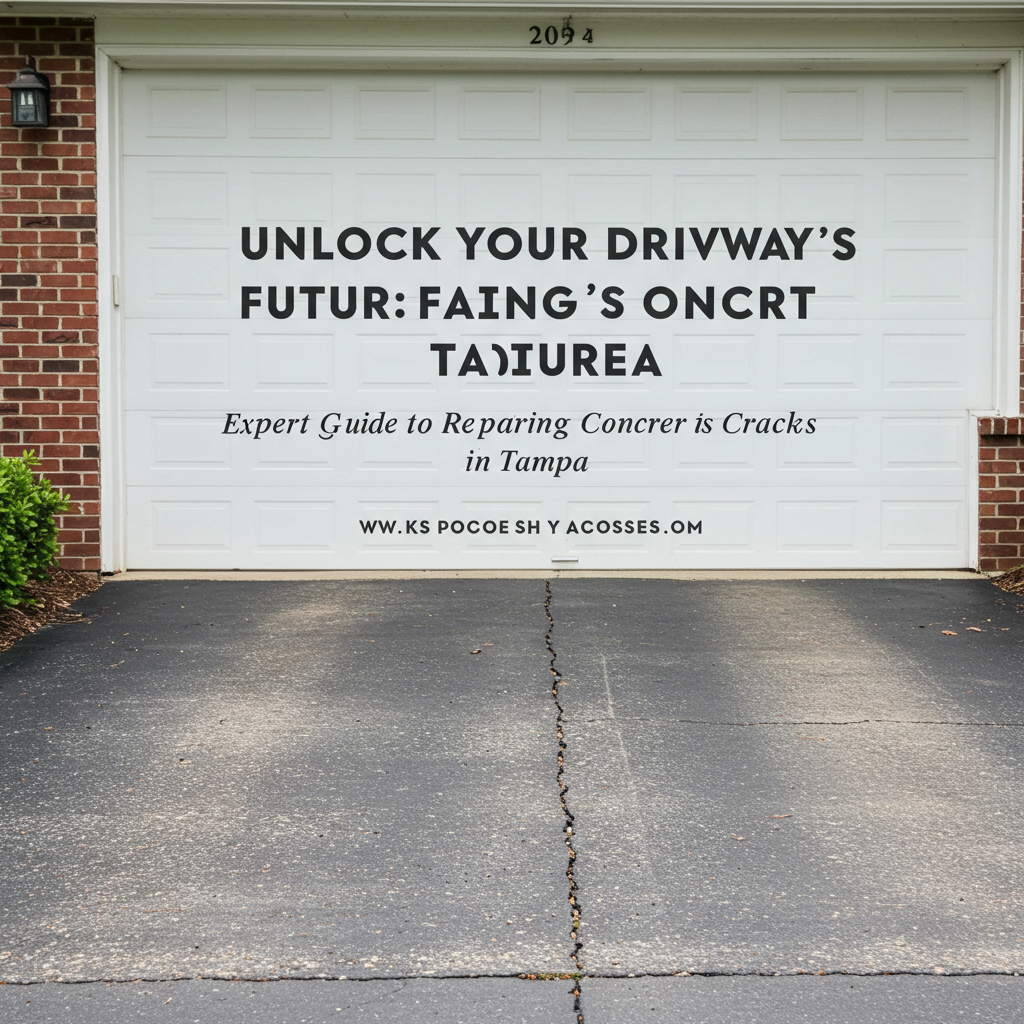
Unlock Your Driveway's Future: Expert Guide to Repairing Concrete Cracks in Tampa
Effectively repairing concrete cracks in Tampa typically involves a multi-step process: first, thoroughly cleaning the crack; then, preparing the crack by widening or undercutting; next, selecting the appropriate filler or sealant based on the crack type and size; and finally, applying and finishing the repair material to ensure durability and a seamless appearance.
What are the different types of concrete cracks I might see in Tampa?
Concrete, while remarkably durable, is not immune to cracking. Understanding the various types of cracks you might observe on your Tampa property is the first step toward effective remediation. Each crack tells a story about its origin and often dictates the best repair strategy.
- Hairline Cracks: These are very fine, shallow cracks, often appearing shortly after the concrete has been poured and cured. They are usually a result of surface shrinkage during drying and are generally not a structural concern. In Tampa's humid climate, hairline cracks can sometimes become more noticeable due to moisture fluctuations.
- Shrinkage Cracks: More pronounced than hairline cracks, these occur as the concrete cures and loses moisture. They often appear in a somewhat random pattern and indicate the concrete pulling apart slightly. While not typically a structural issue, if left unsealed, water can infiltrate, leading to more significant problems.
- Settlement Cracks: These cracks are a serious concern. They usually run diagonally or vertically and indicate that the underlying soil or sub-base beneath the concrete has settled unevenly. In areas with sandy soils like Tampa, improper compaction or shifting soil can lead to significant settlement, causing the concrete slab to crack under stress.
- Expansion Cracks: Concrete expands and contracts with temperature changes. Without adequate expansion joints, concrete slabs can push against adjacent structures or each other, leading to pressure cracks. Tampa's intense heat makes proper expansion joint placement critical.
- Load-Related Cracks: When concrete is subjected to loads greater than its design capacity, it can crack. This is common in driveways or commercial areas where heavy vehicles might exceed the slab's thickness or reinforcement. These cracks often appear as spiderweb patterns or deep, linear fissures.
- Spalling and Pop-outs: These aren't cracks in the traditional sense but surface damage. Spalling is when the surface layers of concrete flake off, often due to moisture freezing and expanding (though less common in Tampa, it can happen with poor drainage), or from alkali-silica reaction. Pop-outs are small, cone-shaped cavities caused by porous aggregate particles absorbing moisture and expanding.
Why do concrete cracks appear in Tampa's unique climate and soil?
Tampa's environment presents specific challenges that contribute to concrete cracking. It's not just about age; it's about the interplay of heat, humidity, and underlying geology.
- Extreme Heat and Humidity: Tampa's high temperatures cause concrete to expand significantly. Conversely, cooler nights (especially during winter) lead to contraction. This constant thermal cycling puts immense stress on concrete, especially if proper expansion joints were not installed or are insufficient. The high humidity can also affect the drying and curing process, potentially leading to increased shrinkage cracks.
- Sandy, Shifting Soils: Much of Tampa sits on sandy or loose soil. While well-draining, these soils can be susceptible to erosion, compaction, or shifting if not properly prepared and compacted before concrete installation. Uneven settlement of the sub-base is a primary cause of severe structural cracks in concrete slabs, driveways, and foundations.
- Heavy Rainfall and Drainage Issues: Tampa experiences significant rainfall, especially during hurricane season. Poor drainage can allow water to seep under concrete slabs, washing away sub-base material, leading to voids and subsequent settlement. Standing water on concrete can also degrade the surface over time, contributing to spalling or accelerating crack formation.
- Tree Roots: A common culprit in Tampa, aggressive tree roots can grow under and lift concrete slabs, creating immense pressure that results in lifting and cracking. This is particularly prevalent in older neighborhoods with mature trees.
- Sub-standard Installation: While not unique to Tampa, improper mixing, insufficient curing, or inadequate sub-base preparation during the initial installation can significantly weaken concrete, making it far more susceptible to cracking from environmental stressors.
When is the right time to address concrete cracks on your Tampa property?
Procrastination can be costly when it comes to concrete cracks. Addressing them promptly is crucial for both aesthetic and structural reasons.
- As Soon as They Appear: The best time to address any crack is as soon as it's noticed. Even hairline cracks, if left unsealed, can allow water infiltration. This moisture can lead to several problems:
- Freeze-Thaw Damage (less common but possible): While Tampa rarely sees freezing temperatures, if water seeps into a crack and then freezes, it expands, widening the crack.
- Sub-base Erosion: Water penetration can wash away the supporting soil beneath the concrete, creating voids and leading to further settlement and more severe cracking.
- Rebar Corrosion: Most concrete slabs have steel reinforcement (rebar). Water reaching this rebar can cause it to rust and expand, leading to 'spalling' or 'rust jacking' – where the concrete surface delaminates or lifts.
- Weed and Pest Infestation: Cracks provide openings for weeds to grow, further widening the crack, and can become entry points for pests.
- Before They Worsen: Small cracks are much easier and less expensive to repair than large, structural ones. What starts as a minor surface crack can quickly escalate into a major issue if neglected, potentially requiring full slab replacement rather than a simple repair.
- For Safety Reasons: Cracks, especially those that cause uneven surfaces or tripping hazards, should be repaired immediately to prevent accidents. This is particularly important for commercial properties where liability is a significant concern.
- To Maintain Property Value: Cracked concrete significantly detracts from a property's curb appeal and overall value. Timely repairs ensure your property looks its best and maintains its market worth.
How do experts approach effective concrete crack repair in Tampa?
Professional concrete crack repair goes far beyond simply filling a gap. It involves a systematic approach to ensure a lasting and aesthetically pleasing result.
1. Assessment and Diagnosis
The first and most critical step is a thorough assessment by experienced professionals. This involves:
- Identifying Crack Type: Determining if it's a hairline, shrinkage, settlement, or other type of crack.
- Assessing Severity: Measuring crack width, depth, and evaluating if it's active (growing) or dormant.
- Investigating Causes: Looking for underlying issues like sub-base failure, drainage problems, or tree root encroachment. This diagnostic phase is crucial for selecting the correct repair method.
2. Crack Preparation
Proper preparation is paramount for the bonding of repair materials.
- Cleaning: Cracks are thoroughly cleaned of dirt, debris, loose concrete, and vegetation using wire brushes, air blowers, pressure washers, or vacuums.
- Widening/Undercutting (for specific repairs): For deeper or structural cracks, technicians might use a grinder or chisel to create a 'V' or 'U' shape, or undercut the crack, to allow the filler material to key into the concrete more effectively and create a stronger bond.
3. Material Selection
The choice of repair material depends heavily on the crack type, size, and whether the crack is active or dormant.
- Epoxy Injectors: For structural cracks, especially those indicating settlement, high-strength epoxy injection can effectively bond the two sides of the crack, restoring structural integrity. This is often used for foundations and load-bearing slabs.
- Polyurethane Sealants: Flexible polyurethane sealants are excellent for active cracks that might continue to move slightly due to thermal expansion/contraction. They provide a waterproof seal and allow for some flexibility.
- Cementitious Patching Compounds: For wider, non-moving cracks or spalling, a polymer-modified cementitious patching compound can be used. These mixes are designed to bond well with existing concrete and can be troweled smooth.
- Caulking/Crack Fillers: For smaller, non-structural cracks, acrylic latex or silicone caulk can be used to seal out moisture and improve aesthetics.
4. Application and Finishing
Skilled application is key to a durable and attractive repair.
- Application Technique: Materials are applied precisely, often using specialized equipment like injection guns for epoxies, or trowels for patching compounds.
- Curing: Proper curing of cementitious patches is essential for achieving full strength, which might involve keeping the area moist for a period.
- Finishing: The repaired area is finished to match the surrounding concrete's texture and color as closely as possible. This might involve feathering edges, brooming, or stamping to blend seamlessly.
What are the long-term benefits of repairing concrete cracks in Tampa?
Investing in timely and professional concrete crack repair offers numerous advantages for Tampa property owners.
- Enhanced Structural Integrity: Repairing structural cracks, especially with epoxy injection, can restore the load-bearing capacity of your concrete, preventing further deterioration and potential hazards. This is crucial for driveways, patios, and foundations.
- Extended Pavement Lifespan: By sealing cracks, you prevent water penetration, which is the leading cause of concrete deterioration in Florida. This significantly extends the life of your concrete surfaces, delaying the need for costly replacement.
- Improved Curb Appeal and Property Value: A smooth, crack-free concrete surface dramatically enhances the aesthetic appeal of your property. This boosts curb appeal, making your home or business more attractive and potentially increasing its market value.
- Increased Safety: Eliminating tripping hazards caused by uneven or wide cracks improves safety for residents, customers, and visitors, reducing the risk of falls and potential liability.
- Cost Savings Over Time: While there's an initial investment, repairing cracks is far more cost-effective than allowing them to worsen to the point where full concrete replacement is necessary. Proactive maintenance saves substantial money in the long run.
- Prevention of Further Damage: Small cracks can quickly become large problems. Timely repairs halt the progression of damage, protecting your sub-base, preventing rebar corrosion, and maintaining the overall health of your concrete infrastructure.
Don't let concrete cracks compromise the safety, appearance, or value of your Tampa property. Understanding the causes and implementing effective, professional repair strategies is key to maintaining your investment. For expert assessment and durable solutions, trust the local specialists. Tampa Concrete & Paving offers comprehensive concrete crack repair services, utilizing advanced techniques and materials to ensure your surfaces are restored to their optimal condition, built to withstand the unique challenges of the Tampa climate. Contact us today for a consultation and protect your concrete for years to come.
Need Professional Assistance?
Get a free, no-obligation estimate from our expert local team today.