Mastering Concrete Slab Construction: A Tampa Homeowner's Guide to Lasting Foundations
Concrete slabs are the bedrock of countless structures across Tampa, from residential homes and commercial buildings to sturdy patios and industrial floors. Far more than just a flat surface, a well-constructed concrete slab is a complex engineered system designed to bear weight, resist environmental stressors, and provide a stable foundation for decades. In a region like Tampa, characterized by its unique soil conditions, high humidity, and intense sun, the quality of your concrete slab construction is paramount. Cutting corners during this critical phase can lead to costly structural problems down the line, including cracking, shifting, and moisture issues. Understanding the best practices for creating durable concrete slabs in Florida is essential for any property owner embarking on a new build or renovation.
Why is Professional Site Preparation Crucial for Tampa Concrete Slabs?
The strength and longevity of any concrete slab construction in Tampa begin long before the concrete truck arrives. Proper site preparation is arguably the most critical phase, directly impacting the slab's ability to resist settlement, cracking, and moisture intrusion. Tampa's sandy soils, often close to the water table, present specific challenges that demand expert attention.
- Soil Compaction: Inadequate compaction of the subgrade is a leading cause of slab failure. Loose soil will settle over time, leading to voids beneath the slab and subsequent cracking. Professionals use specialized equipment to achieve optimal compaction, ensuring a stable, uniform base. This is especially vital for preventing differential settlement, where one part of the slab sinks more than another.
- Drainage and Grading: Effective site grading ensures water flows away from the foundation, preventing hydrostatic pressure buildup and erosion. Proper drainage systems, including perimeter drains or French drains, might be necessary in areas prone to standing water or high water tables. This protects the slab from moisture-related issues and helps maintain soil stability underneath.
- Vapor Barriers: Florida's humidity necessitates the installation of a high-quality vapor barrier directly beneath the concrete slab. This thick polyethylene sheeting prevents ground moisture from migrating upward into the slab, which can lead to mold growth, flooring damage, and contribute to slab deterioration. It is a non-negotiable step for durable concrete slabs Florida.
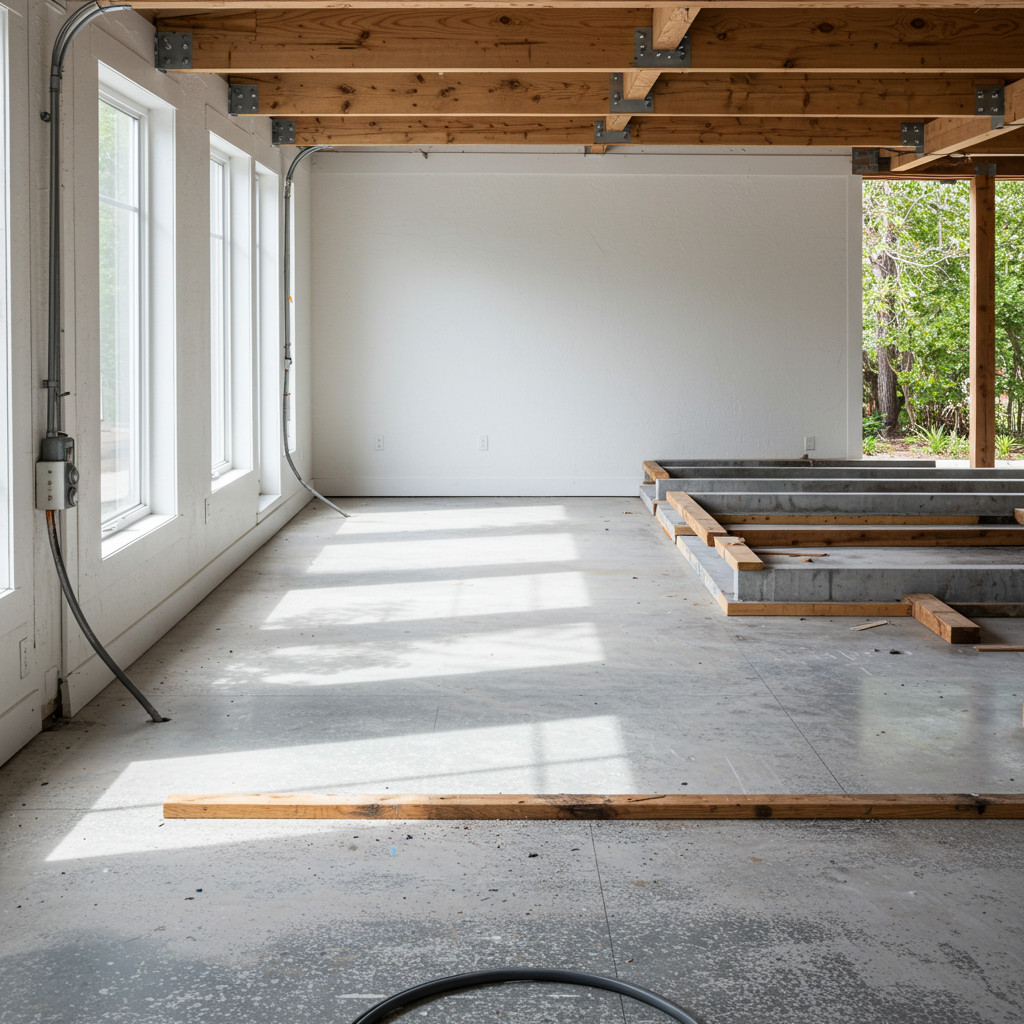
- Formwork: Accurate and sturdy formwork defines the slab's dimensions, height, and level. Poorly constructed forms can lead to uneven edges, incorrect thickness, and even blowouts during the pour, compromising the structural integrity of the entire slab. Precision in form setting ensures the slab cures correctly and performs as designed.
Investing in professional site preparation pays dividends by establishing a robust foundation that can withstand Tampa's unique environmental pressures for many years.
What Are the Best Reinforcement Practices for Concrete Slabs in Florida?
Once the site is prepared, the next critical step for foundation concrete Tampa is the strategic incorporation of reinforcement. Concrete is inherently strong in compression but weak in tension. Reinforcement materials provide the necessary tensile strength, helping the slab resist cracking from shrinkage, temperature fluctuations, and structural loads. For areas like Tampa, prone to high winds and potential seismic activity, robust reinforcement is non-negotiable.
- Rebar (Reinforcing Bar): Steel rebar is the most common and effective reinforcement. It should be properly sized and spaced according to engineering specifications, lifted off the subgrade with "chairs" or "dobies" to ensure it's embedded within the middle or upper third of the slab. This positioning allows it to effectively counter tensile forces. For larger slabs or those supporting heavy loads, specific rebar patterns and diameters are crucial. Rebar installation Tampa standards dictate precise placement to maximize its effectiveness.
- Welded Wire Mesh (WWM): Often used for smaller slabs or as a supplementary reinforcement, WWM consists of steel wires welded into a grid pattern. Like rebar, it must be properly supported to remain in the correct position within the slab. While useful for controlling minor surface cracking, WWM alone is often insufficient for structural slabs or those exposed to significant stress.
- Fiber Reinforcement: Synthetic fibers (polypropylene, nylon) or steel fibers can be added to the concrete mix to enhance its ductility, impact resistance, and reduce plastic shrinkage cracking. While not a replacement for structural rebar, fibers provide an additional layer of protection against micro-cracking and can improve the overall integrity and lifespan of the concrete.
The type and amount of reinforcement will vary depending on the slab's intended use, size, and local building codes. A structural engineer's input is invaluable to ensure the reinforcement system is correctly designed for the specific application and environment.
How Do Tampa's Climate Challenges Impact Concrete Curing and Finishing?
The act of pouring and finishing concrete might seem straightforward, but in Tampa's hot and humid climate, these stages demand expert knowledge and careful execution to prevent rapid drying, cracking, and a weakened slab. The quality of the concrete mix and the subsequent curing process are paramount for achieving durable concrete slabs Florida.
- Concrete Mix Selection: Opting for a concrete mix designed for Tampa's conditions is vital. This includes selecting the right water-cement ratio (too much water weakens concrete), appropriate aggregates, and potentially admixtures (like retarders to slow setting in hot weather, or superplasticizers for workability without extra water). A high-quality, professional mix minimizes shrinkage and maximizes strength.
- Effective Pouring Techniques: Proper concrete pouring techniques Tampa professionals employ involve minimizing segregation of aggregates, ensuring even distribution, and avoiding overworking the concrete. Timeliness is also critical; concrete should be placed and leveled efficiently before it begins to set, especially in warm weather.
- Finishing with Precision: The finishing process, which includes floating and troweling, is not just about aesthetics; it compresses the surface, creating a dense, durable skin. However, over-finishing or finishing too early can trap bleed water, leading to a weak, dusty surface (laitance) or scaling. Professionals know precisely when to work the surface based on the concrete's setting time and environmental conditions.
- Critical Curing Methods: Curing is the most overlooked yet crucial step for concrete strength. It involves maintaining adequate moisture and temperature for a specified period after placement, allowing the cement to fully hydrate. In Tampa's heat, rapid evaporation can cause surface cracking and reduce ultimate strength by up to 50% if not properly cured. Effective curing methods include:
- Wet Curing: Keeping the slab continuously wet with sprinklers, wet burlap, or fogging.
- Curing Compounds: Applying a liquid membrane that seals in moisture.
- Plastic Sheeting: Covering the slab with plastic to prevent moisture loss.
A minimum of 7 days of continuous curing is recommended for most slabs, with longer periods for optimal strength gain, especially for foundation concrete Tampa.
Mistakes during pouring, finishing, or curing are often irreversible and can significantly compromise the slab's performance and lifespan.
What Role Do Expansion Joints Play in Long-Long Lasting Concrete Slabs?
Even with perfect site preparation, reinforcement, and curing, concrete slabs are susceptible to cracking due to natural expansion and contraction caused by temperature changes and drying shrinkage. This is particularly pronounced in Florida, where temperature swings, though less extreme than some northern states, still impact concrete. Expansion joints, also known as control joints or isolation joints, are strategically placed to manage these movements and prevent random, unsightly, and structurally compromising cracks.
- Control Joints (Contraction Joints): These are saw-cut or grooved into the slab surface, typically to about one-quarter of the slab's thickness. They create weakened planes in the concrete, guiding where shrinkage cracks will occur predictably and invisibly beneath the joint. Proper spacing of control joints is critical; if they are too far apart, random cracking will still occur. The spacing depends on the slab's thickness and expected shrinkage.
- Isolation Joints (Expansion Joints): These are full-depth separations that completely sever the slab from other structures, such as columns, walls, or existing pavements. They are filled with a compressible material (e.g., asphalt-impregnated fiberboard or cork) to allow independent movement. This prevents stresses from being transferred between the slab and other rigid elements, which could otherwise lead to severe cracking or structural damage. For example, a new patio slab should be isolated from an existing house foundation.
- Construction Joints: These are planned stopping points in the concrete pour, often used when a large slab cannot be poured in one continuous operation. They can be simple butt joints with dowel bars for load transfer or keyed joints that interlock for stability.
The strategic placement and correct installation of these joints are a hallmark of expert concrete slab construction Tampa. They are a preventative measure, allowing the concrete to move naturally without causing detrimental stress within the slab itself.
Building a durable concrete slab in Tampa demands more than just mixing cement, aggregate, and water. It requires a deep understanding of local environmental conditions, adherence to stringent construction practices, and the skilled hand of experienced professionals. From the initial meticulous site preparation and strategic reinforcement to precise pouring, diligent curing, and the intelligent placement of expansion joints, every step contributes to the ultimate strength and longevity of your foundation.
For residential or commercial projects requiring high-quality, long-lasting foundation concrete Tampa, trust in the expertise of Tampa Concrete & Paving. Our team combines extensive local experience with the latest techniques and materials to ensure your concrete slab withstands the test of time and climate. Don't compromise on the foundation of your investment; contact Tampa Concrete & Paving today for a consultation on your next concrete slab project.
Need Professional Assistance?
Get a free, no-obligation estimate from our expert local team today.