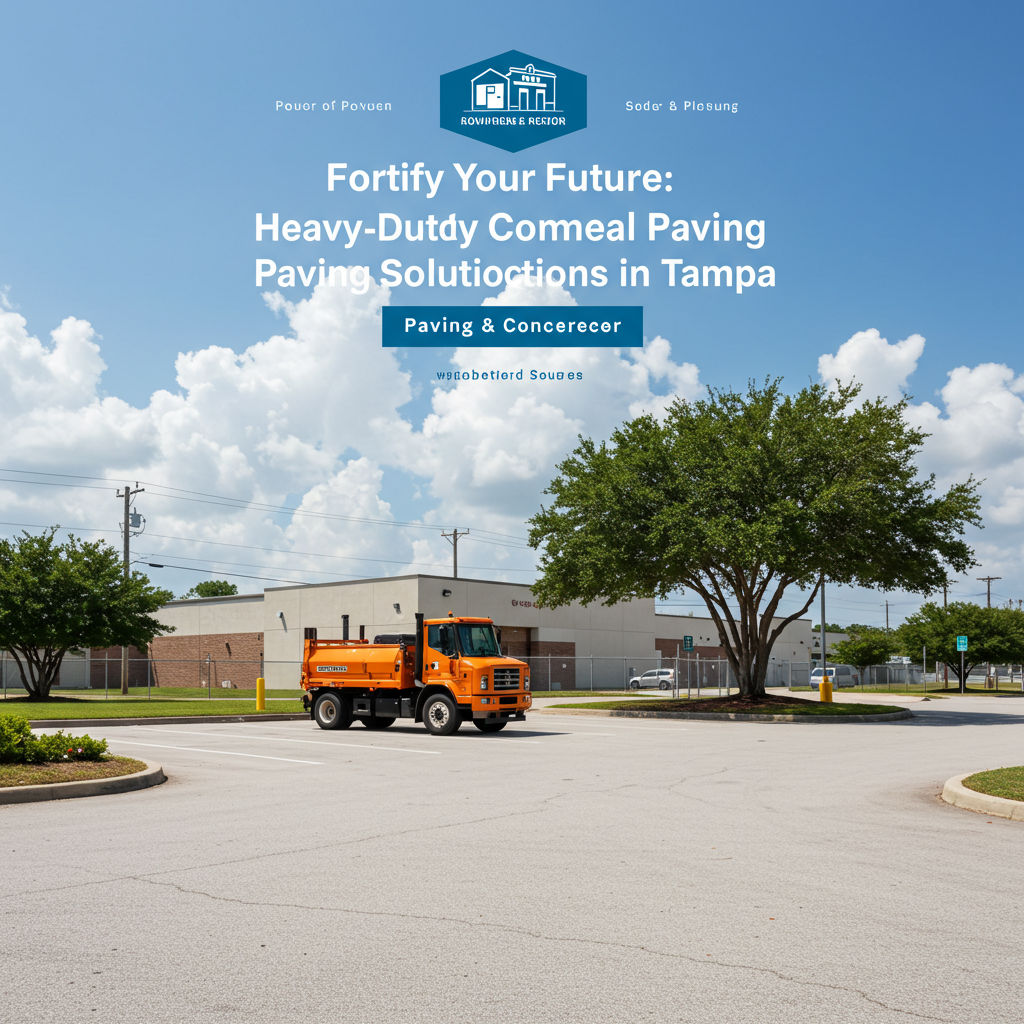
Fortify Your Future: Heavy-Duty Commercial Paving Solutions in Tampa
What Are the Key Considerations for Heavy-Duty Commercial Paving in Tampa?
For businesses in Tampa that rely on heavy vehicle traffic – from logistics hubs and manufacturing plants to large retail centers and equipment yards – the integrity of your pavement is paramount. It's not just about a smooth surface; it's about a critical infrastructure investment that directly impacts operations, safety, and profitability. Several core considerations must be addressed to ensure your heavy-duty commercial paving stands the test of time and traffic.
- Traffic Volume and Type: Understanding the daily volume, weight, and type of vehicles (e.g., semi-trucks, forklifts, heavy machinery) is the foundational step. This data informs the required pavement thickness and material strength.
- Sub-grade Strength and Preparation: The soil beneath the pavement is its ultimate support. In Tampa, varying soil conditions necessitate thorough geotechnical analysis. Proper compaction and stabilization of the sub-grade are non-negotiable for distributing heavy loads and preventing settlement.
- Drainage Systems: Water is the enemy of all pavement. Effective drainage is crucial to prevent water infiltration into the sub-base, which can lead to weakening and structural failure under heavy loads. Sloping, catch basins, and underground piping must be expertly designed.
- Material Selection: Choosing between heavy-duty asphalt, reinforced concrete, or specialized interlocking pavers depends on the specific load requirements, budget, and desired lifespan. Each material has distinct properties regarding compressive strength, flexibility, and resistance to wear.
- Structural Design: Beyond material, the structural layers (sub-base, base, and surface course) must be engineered to work in harmony. This includes determining appropriate layer thicknesses and reinforcement strategies, such as steel rebar in concrete or fiber reinforcement in asphalt.
How Does Tampa's Unique Environment Impact Heavy Vehicle Pavement Design?
Tampa's climate and geographical characteristics present specific challenges for heavy-duty commercial paving. Ignoring these factors can lead to premature failure and costly repairs, even with the most robust designs. Expert pavement design must account for:
- High Humidity and Rainfall: Frequent heavy rains and high humidity can saturate the sub-grade if drainage is inadequate. This reduces soil bearing capacity, making the pavement more susceptible to rutting and cracking under heavy loads. Pavement permeability and rapid water runoff are critical design aspects.
- Intense Solar Radiation: Tampa's intense sun exposure causes significant temperature fluctuations. Asphalt surfaces, in particular, can soften under extreme heat, making them vulnerable to permanent deformation (rutting) from heavy wheel loads. Concrete can also experience thermal expansion and contraction, necessitating proper expansion joint design.
- Coastal Proximity and Salinity: For commercial properties near the coast, exposure to salt spray can accelerate material degradation, particularly for steel reinforcement in concrete. Using corrosion-resistant materials or specialized coatings becomes a vital protective measure.
- Expansive Clays and Poorly Draining Soils: Tampa's soil composition can include expansive clays that swell when wet and shrink when dry, creating differential movement. Conversely, some areas have poorly draining sandy soils. Comprehensive soil testing and appropriate stabilization techniques, such as lime or cement treatment, are essential to create a stable foundation for heavy loads.
What Paving Materials Are Best Suited for Industrial Traffic in Tampa?
Selecting the right material is a cornerstone of heavy-duty paving success in Tampa. Each option offers unique advantages and considerations for industrial applications:
1. High-Strength Concrete Pavement (Rigid Pavement)
Why it's ideal: Concrete is renowned for its exceptional compressive strength and rigidity, making it highly resistant to rutting and deformation under static or slow-moving heavy loads. It distributes loads over a wider area, reducing stress on the sub-grade. It also stands up well to fuel and oil spills.
Considerations for Tampa: Proper joint design is critical to manage thermal expansion and contraction. High-quality curing is essential to achieve maximum strength and durability in humid conditions. Reinforced concrete, using rebar or mesh, is often preferred for areas with extremely heavy point loads.
2. Heavy-Duty Asphalt Pavement (Flexible Pavement)
Why it's ideal: Modern asphalt mixes, especially those designed for heavy traffic, can offer excellent flexibility, which helps them accommodate minor sub-grade movements without cracking. It's also quicker to install and repair than concrete, minimizing operational downtime.
Considerations for Tampa: Specialized asphalt mixes with polymers or higher aggregate content are necessary to resist rutting in Tampa's heat. A thick, stable base and sub-base are paramount for load distribution. Regular sealing and crack filling are crucial for maintenance due to potential water infiltration.
3. Composite Pavement
Why it's ideal: This involves combining layers of both concrete and asphalt, often with an asphalt overlay on a concrete base. This can leverage the strength of concrete with the smoother, more flexible surface of asphalt.
Considerations for Tampa: This approach offers a hybrid solution, potentially balancing the cost-effectiveness of asphalt with the load-bearing capacity of concrete. Design must carefully consider the interface between the two materials and their differing thermal properties.
4. Permeable Paving Solutions (Specific Applications)
Why it's ideal: While not a primary choice for direct heavy traffic lanes, permeable pavers or porous concrete can be integrated into parking areas or shoulders for stormwater management. They help reduce runoff and replenish groundwater, which is beneficial in Tampa's environment.
Considerations for Tampa: These materials require specialized sub-base designs to function effectively for drainage and must be chosen carefully for areas not subject to the most intense, concentrated heavy loads.
What Maintenance Strategies Extend the Life of Heavy-Duty Commercial Pavements in Tampa?
Even the most expertly designed and constructed heavy-duty pavement requires proactive maintenance to achieve its maximum lifespan, especially in Tampa's demanding environment. Neglecting maintenance can quickly lead to accelerated deterioration and significantly higher repair costs down the line.
For Asphalt Pavements:
- Regular Inspections: Conduct weekly or monthly visual inspections for cracks, potholes, rutting, and signs of water pooling.
- Crack Sealing: Immediately seal any cracks to prevent water from penetrating the sub-base. This is especially critical during Tampa's rainy season.
- Pothole Repair: Repair potholes promptly using hot-mix asphalt patches to restore structural integrity and prevent further damage.
- Sealcoating: Apply a high-quality sealcoat every 2-3 years to protect the asphalt from UV rays, oxidation, and minor spills, extending its flexibility and aesthetic appeal.
- Overlay/Resurfacing: When surface deterioration is extensive but the base is still sound, an asphalt overlay can restore the pavement's functionality and extend its life.
For Concrete Pavements:
- Joint Sealing: Regularly inspect and re-seal expansion and contraction joints to prevent water and debris from entering, which can cause 'pumping' and sub-base erosion.
- Crack Repair: Address concrete cracks through routing and sealing, or injecting epoxy for structural cracks, to prevent water damage and spalling.
- Surface Cleaning: Remove oil, grease, and chemical spills promptly to prevent staining and surface degradation. Pressure washing can help maintain cleanliness.
- Slab Repair/Replacement: For severely damaged or settled concrete slabs, partial or full slab replacement may be necessary to maintain a uniform, load-bearing surface.
- Grinding or Planing: For uneven sections or faulting at joints, grinding or planing can restore a smooth surface, improving safety and rideability.
Implementing these preventative strategies ensures your heavy-duty commercial pavement in Tampa remains a reliable and cost-effective asset for years to come. When you need expert advice, design, or installation for your commercial paving project, trust the specialists at Tampa Concrete & Paving. Our team understands the unique demands of Tampa's climate and heavy industrial traffic, providing durable, high-performance solutions tailored to your business needs. Contact us today for a consultation to fortify your commercial property's infrastructure.
Need Professional Assistance?
Get a free, no-obligation estimate from our expert local team today.