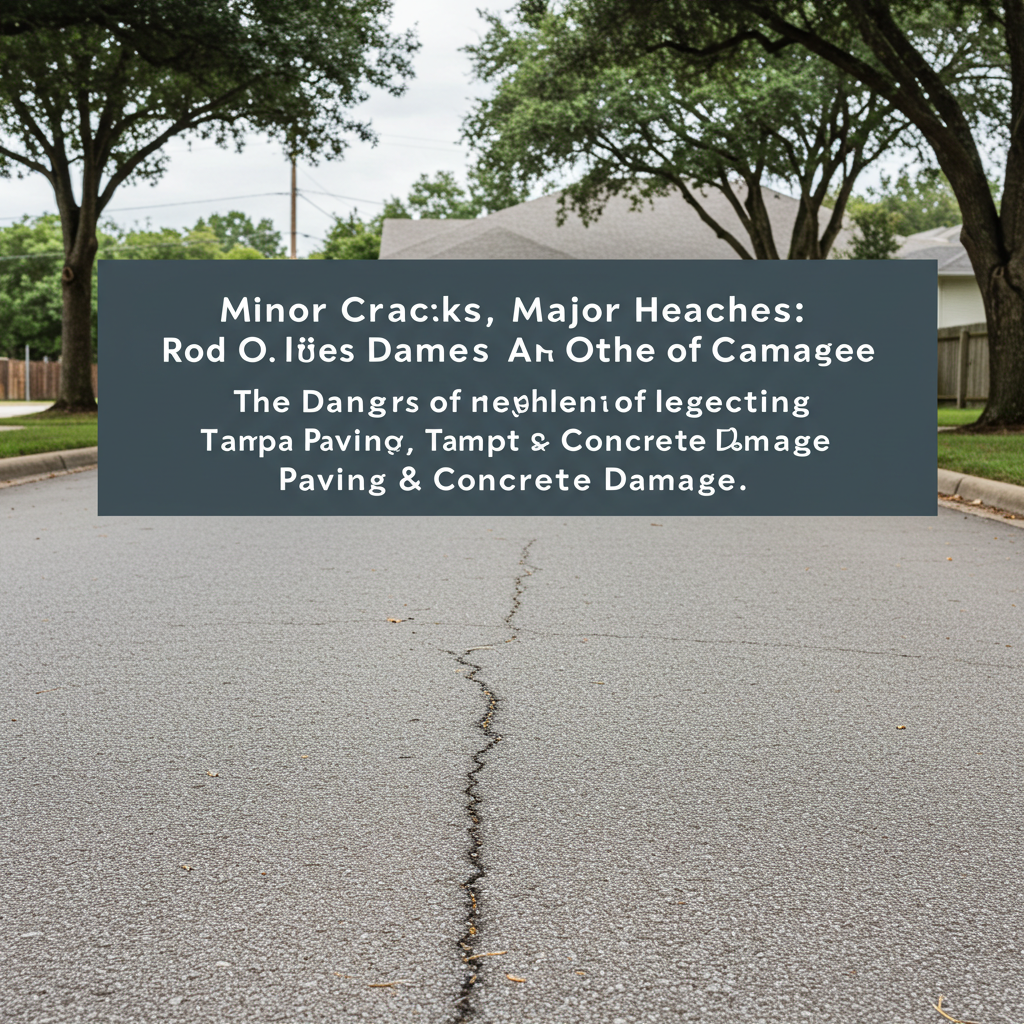
Minor Cracks, Major Headaches: The Dangers of Neglecting Tampa Paving & Concrete Damage
In sunny Tampa, Florida, property owners often face the challenge of maintaining their outdoor surfaces. While we enjoy beautiful weather, the intense sun, heavy rainfall, and subtropical climate can take a toll on driveways, walkways, patios, and parking lots. It’s easy to dismiss a small hairline crack or a tiny chip as a minor cosmetic flaw, something you can get to later. However, this seemingly insignificant damage can be a harbinger of more severe and costly problems down the line. Understanding the hidden dangers of neglecting these minor issues is key to protecting your investment and ensuring the safety of your property.
Why Do Minor Cracks in Tampa Concrete Become Major Problems?
The progression from a small crack to a significant structural issue isn't instantaneous, but it is often inevitable, especially in Tampa's unique environment. Several factors contribute to the rapid escalation of seemingly minor paving and concrete damage:
- Water Infiltration: This is arguably the most critical factor. Even a hairline crack provides an entry point for water. When Tampa experiences its frequent heavy rains, water seeps into these cracks, reaching the sub-base material beneath your concrete or asphalt. Over time, this water erodes the sub-base, washing away supporting soil and creating voids. Without proper support, the pavement above will eventually sag, crack further, and potentially collapse. The thermal expansion and contraction caused by Tampa’s hot days and cooler nights also exacerbate this, as water in cracks expands and contracts, widening them.
- Root Intrusion: Florida's lush landscaping often includes trees and shrubs with extensive root systems. Small cracks are like invitations for these roots. As roots grow and expand, they exert immense pressure on the pavement, lifting and fracturing the concrete or asphalt from below, turning a minor crack into a major structural upheaval.
- Soil Instability and Expansion: Florida soils, especially those with high clay content or organic matter, can expand and contract significantly with changes in moisture levels. Water entering cracks can saturate the underlying soil, leading to movement that stresses the pavement above, causing more cracking and uneven surfaces.
- Traffic and Weight Distribution: Every time a vehicle drives over a cracked surface, it applies stress. What might be a stable surface with intact paving becomes a weak point where the load is no longer evenly distributed. This repetitive stress causes the cracks to propagate, leading to larger fractures, potholes, and a general breakdown of the material.
- Oxidation and UV Damage (for asphalt): The intense Tampa sun's UV rays cause the asphalt binder to oxidize and become brittle. Minor surface cracks can be accelerated by this process, leading to a loss of aggregate and further deterioration of the asphalt matrix.
What Are the Hidden Dangers of Neglected Paving Damage in Tampa?
Ignoring small issues isn't just about aesthetics; it carries a range of significant risks for both residential and commercial properties in Tampa:
- Safety Hazards and Liability: Cracked, uneven, or crumbling surfaces create dangerous trip hazards for pedestrians and cyclists. For businesses, this translates to increased liability risks and potential lawsuits. Even on residential properties, guests or family members can suffer injuries, leading to costly medical bills and strained relationships. Vehicle tires can also be damaged by sharp edges or deep potholes, leading to blowouts or alignment issues.
- Compromised Structural Integrity: As water infiltrates and the sub-base erodes, the entire paving system loses its structural integrity. What starts as a simple crack can quickly become a large pothole or a section of pavement that completely collapses, rendering it unusable and unsafe. This structural compromise can even extend to adjacent foundations if water drainage is severely impacted.
- Decreased Property Value and Curb Appeal: First impressions matter. Cracked, faded, or damaged driveways, walkways, and parking lots significantly detract from your property's curb appeal. For homeowners, this can impact resale value, while for businesses, it can deter customers and convey an image of neglect.
- Pest Infestation: Small cracks in concrete or paving can become convenient entry points for various pests, including ants, termites, and other insects. These pests can then migrate to your home or business, creating a whole new set of problems.
- Erosion and Drainage Issues: Damaged paving often exacerbates existing drainage problems or creates new ones. Water that would normally run off a properly maintained surface can collect in cracks and low spots, leading to pooling. This stagnant water can erode surrounding landscaping, damage building foundations, and become a breeding ground for mosquitoes, a common concern in Tampa.
- Escalating Repair Costs: This is perhaps the most tangible danger. A minor crack that could have been sealed for a small sum can, if ignored, lead to a major repair involving sub-base reconstruction or even complete replacement of the paved area. Procrastination in paving maintenance rarely saves money; it almost always increases the ultimate expense.
How Can Tampa Property Owners Spot Early Warning Signs of Paving Deterioration?
Being proactive starts with regular inspection. Knowing what to look for can help you catch problems early, before they escalate. Here are key warning signs for your Tampa property:
- Hairline Cracks: Don't dismiss any cracks, no matter how small. Pay attention to their patterns: linear cracks often indicate settlement, block cracking suggests drying shrinkage, and 'alligator' or 'spiderweb' cracks are a strong indicator of sub-base failure.
- Spalling or Flaking: This refers to pieces of concrete or asphalt breaking off the surface. It often indicates moisture damage, poor quality material, or improper curing, and can expose the underlying aggregate to further damage.
- Discoloration or Stains: Persistent dark spots could indicate chronic water saturation beneath the surface, while oil or chemical stains can degrade the paving material over time.
- Pooling Water: After a rain shower, observe your paved surfaces. Any areas where water consistently pools indicate an uneven surface, poor drainage, or underlying settlement. This is a red flag for potential sub-base issues.
- Uneven Surfaces or Sunken Areas: If sections of your driveway, walkway, or parking lot appear to be settling or sinking, it's a clear sign of sub-base erosion or soil instability that requires immediate attention.
- Loose Aggregates (for asphalt): If you see small stones or gravel coming loose from your asphalt surface, it means the binder material is failing, often due to oxidation or water damage.
- Faded Sealant or Surface Wear: A dull, faded appearance on sealed concrete or asphalt means the protective layer is no longer effective, leaving the underlying material vulnerable to the elements.
- Weeds or Grass Growing Through Pavement: While annoying, this is also a clear indicator of cracks or gaps in your paving where plant life has found purchase. These roots will further exacerbate any existing damage.
When Should You Call a Professional for Paving & Concrete Issues in Tampa?
While some minor cosmetic touch-ups can be DIY projects, the structural integrity of your paving and concrete surfaces is best left to experts. You should contact a professional paving and concrete contractor in Tampa if you observe:
- Any crack wider than a credit card. These are typically too deep for superficial sealant and require proper crack filling or repair.
- Multiple interconnected cracks (alligator cracking). This indicates widespread sub-base failure and often requires more extensive repair or replacement.
- Significant spalling, crumbling, or potholes. These are advanced stages of deterioration that pose immediate safety risks.
- Large sunken areas or uneven surfaces. These problems point to serious sub-base issues that require professional assessment and structural repair.
- Persistent pooling water. A professional can diagnose the underlying drainage problem and recommend effective solutions, from re-grading to installing new drainage systems.
- When you're unsure of the cause or severity. An expert can accurately diagnose the root cause of the damage and recommend the most effective, long-lasting solution.
- Before attempting DIY repairs that could worsen the problem. Improper repair techniques or materials can often exacerbate existing damage and lead to more costly professional interventions later.
A professional assessment provides invaluable benefits. Experienced contractors like Tampa Concrete & Paving possess the expertise to diagnose complex issues, recommend the correct materials and techniques, and execute repairs that ensure long-term durability and safety, often backed by warranties.
Don't let minor issues turn into major expenses. Being proactive about your paving and concrete maintenance in Tampa is the smartest financial and safety decision you can make. If you've noticed any of these warning signs on your property, it's time to act. For a thorough inspection and professional solutions for all your paving and concrete needs, contact Tampa Concrete & Paving today. Our team is ready to help you protect your investment and maintain the beauty and safety of your property.
Need Professional Assistance?
Get a free, no-obligation estimate from our expert local team today.