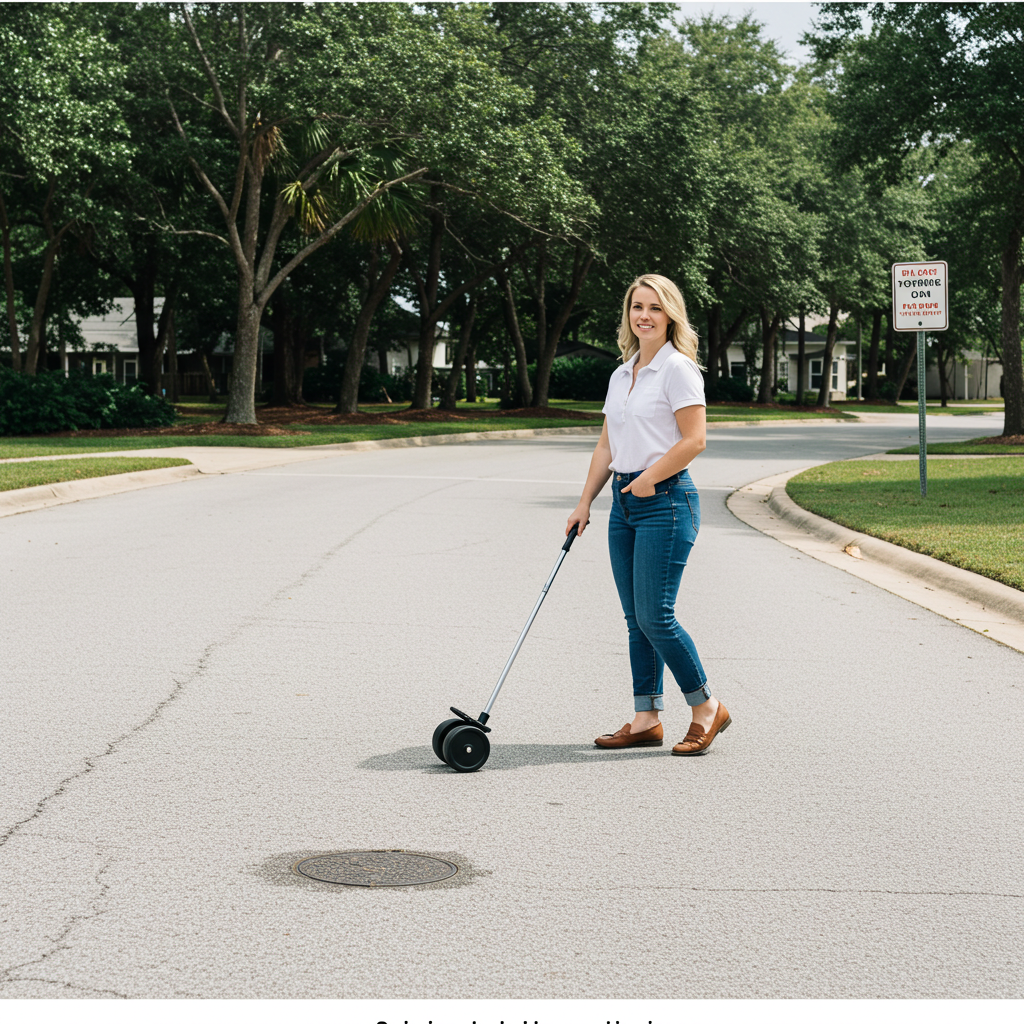
Unlock Pavement Longevity: Why Subgrade Matters for Tampa Properties
What Exactly is Pavement Subgrade and Why is it Critical in Tampa?
When you look at a perfectly smooth, durable paved surface, it's easy to focus solely on the visible asphalt or concrete. However, the true secret to its longevity and performance lies hidden beneath: the pavement subgrade. This often-overlooked layer is the native soil or engineered fill that sits directly below the sub-base or base course. Think of it as the natural foundation upon which your entire pavement structure rests.
In civil engineering, the pavement structure is typically composed of several layers, each with a specific function:
- Surface Course: The top layer (asphalt or concrete) that provides a smooth riding surface, skid resistance, and protects underlying layers.
- Base Course: A layer of crushed stone or granular material directly beneath the surface course, providing structural support and load distribution.
- Sub-base Course: An optional layer of granular material placed between the base course and the subgrade, often used to improve drainage, prevent frost heave (less common in Tampa, but still a factor with moisture), and provide additional structural support.
- Subgrade: The underlying natural soil or compacted fill upon which the entire pavement system is built. This is the ultimate bearing layer for all applied loads.
The primary role of the subgrade is to provide a stable, uniform, and adequately strong foundation. It must be able to support the weight of the pavement layers above it, as well as the traffic loads, without excessive deformation or settlement. In Tampa, where conditions include heavy rainfall, a high water table in many areas, and varying soil compositions from sandy to clayey, the importance of a properly evaluated and prepared pavement subgrade cannot be overstated. A weak or poorly prepared subgrade can lead to a cascade of problems, manifesting as cracks, potholes, and rutting in the surface layer, regardless of the quality of the asphalt or concrete installed above it.
What Are the Common Subgrade Challenges in Tampa's Climate and Soil?
Tampa's unique environment presents several challenges that can severely impact the performance and lifespan of any paving project if the subgrade is not adequately addressed:
- High Water Table and Poor Drainage: Many areas in Tampa are close to sea level or have naturally high water tables. Water is the nemesis of subgrade stability. When the subgrade becomes saturated, its load-bearing capacity significantly diminishes. This can lead to rapid deterioration of the overlying pavement layers, manifesting as pumping (where fines are ejected from cracks under traffic), loss of support, and eventual failure. Effective drainage design is paramount to keep the subgrade dry.
- Variable Soil Types: Tampa's geology can be quite diverse. While sandy soils are common, pockets of more cohesive clayey soils or even organic mucks can be encountered.
- Sandy Soils: Generally drain well but can be susceptible to erosion if not properly confined or compacted. They also require careful compaction to achieve adequate density.
- Clayey Soils: Can be problematic due to their propensity to expand and contract with changes in moisture content. This swelling and shrinking can create significant stresses on the pavement above, leading to cracking and uneven surfaces. They also have lower bearing capacities when wet.
- Organic Soils: These are highly undesirable for subgrades. Organic matter decays over time, creating voids and leading to excessive settlement.
- Inadequate Compaction: This is perhaps the most common and critical subgrade issue. If the soil is not compacted to its optimal density, it will continue to settle under traffic loads, causing unevenness, rutting, and cracks in the pavement above. This is especially true for pavement subgrade Tampa projects where heavy loads are anticipated.
- Lack of Uniformity: If different sections of the subgrade have varying strengths or settlement characteristics, this differential movement will inevitably lead to stress concentrations and cracking in the rigid pavement structure.
Understanding these local challenges is the first step in designing a resilient and long-lasting paving solution for your Tampa property.
How Does Proper Subgrade Preparation Prevent Pavement Failures?
Investing in proper subgrade preparation is arguably the most cost-effective decision in any paving project. It's the preventative medicine that avoids expensive and premature pavement failures. Here's a breakdown of the critical steps:
- Thorough Site Investigation and Soil Testing: Before any dirt is moved, geotechnical engineers perform soil borings and tests (e.g., California Bearing Ratio (CBR) tests, Proctor compaction tests) to understand the subgrade's properties. This identifies soil types, moisture content, bearing capacity, and potential for expansion/contraction. This crucial data informs the entire design process.
- Clearing and Grubbing: All vegetation, topsoil, and organic matter must be completely removed from the project area. Organic material decays and creates voids, leading to future settlement.
- Establishing Proper Grade and Drainage: The subgrade must be graded to the correct elevations and slopes to ensure positive drainage away from the pavement structure. This prevents water from pooling and saturating the subgrade, which is vital in Tampa's rainy season.
- Moisture Conditioning: Soils have an optimal moisture content at which they can be most effectively compacted. The subgrade might need to be wetted or dried to achieve this. Too dry, and it won't compact; too wet, and it becomes unstable.
- Compaction: This is the most critical step. Mechanical rollers are used to densify the soil, expelling air voids and increasing its strength and stability. The soil is compacted in thin layers, or "lifts," to ensure uniform density throughout the subgrade. Achieving the specified compaction density (e.g., 95% of maximum dry density) is paramount for a strong foundation for your durable paving foundation.
- Subgrade Stabilization (if necessary): For particularly weak or problematic soils, stabilization techniques might be employed. This involves mixing the existing subgrade soil with additives like cement, lime, or fly ash. These binders chemically react with the soil to improve its strength, reduce plasticity, and decrease its susceptibility to moisture variations.
- Proof Rolling: After compaction, the subgrade is often "proof rolled" with a heavy roller. This helps identify any soft spots or areas that still exhibit excessive deflection, which can then be addressed before pavement layers are installed.
These meticulous steps ensure the pavement subgrade Tampa projects rely on has the structural integrity to support the traffic and environmental stresses it will endure, leading to significantly extended pavement lifespan and fewer costly repairs down the line.
When Should You Consult a Professional for Subgrade Evaluation?
While the intricacies of subgrade preparation are technical, knowing when to bring in the experts can save you significant time, money, and headaches. You should always consult a professional paving and concrete contractor for subgrade evaluation in the following scenarios:
- New Construction Projects: Any new driveway, parking lot, or roadway installation requires a thorough subgrade assessment. It's the foundation of everything else.
- Pavement Reconstruction or Major Rehabilitation: If you're completely removing and replacing an existing paved surface, the underlying subgrade must be re-evaluated and properly prepared, as previous failures may have originated from subgrade issues.
- Signs of Existing Pavement Failure: If you observe severe cracking (especially alligator cracking), significant rutting, widespread potholes, or areas of pumping (water/fines oozing from cracks), these are strong indicators of underlying subgrade problems. A professional can diagnose the root cause.
- Changes in Site Conditions: If there have been significant changes to the surrounding landscape, drainage patterns, or nearby construction, it could impact your subgrade's stability.
- Any Project in a Known Problematic Soil Area: If your property is in an area notorious for expansive clays, high water tables, or organic soils, expert evaluation is non-negotiable.
Engaging a professional for a comprehensive subgrade evaluation ensures that geological factors, moisture conditions, and optimal compaction requirements are expertly assessed. They possess the knowledge and equipment to conduct necessary soil tests, recommend appropriate stabilization techniques, and oversee the critical preparation phases. This proactive approach minimizes risks and guarantees a robust foundation for your paving investment.
Understanding the vital role of the pavement subgrade is paramount for anyone considering a new paving project or facing issues with existing surfaces in Tampa. It's not just about what you see on the surface; it's about the unseen strength beneath. By prioritizing thorough subgrade preparation, you are investing in the long-term durability and performance of your pavement.
For expert subgrade analysis, preparation, and comprehensive paving solutions in Tampa, trust the professionals at Tampa Concrete & Paving. Our team combines local expertise with advanced techniques to ensure your project stands on the strongest possible foundation, delivering exceptional results that last for decades. Contact us today to discuss your next paving project and learn how our commitment to quality subgrade work protects your investment.
Need Professional Assistance?
Get a free, no-obligation estimate from our expert local team today.