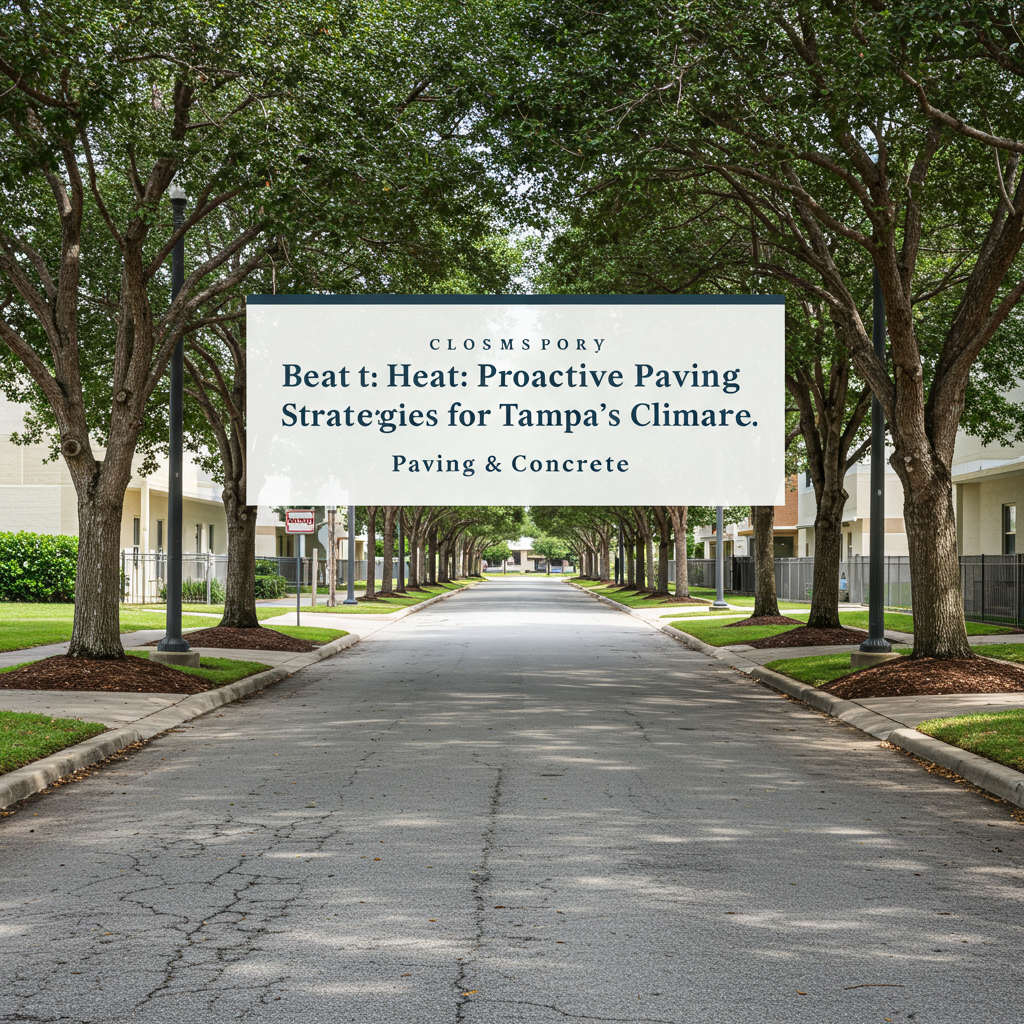
Beat the Heat: Proactive Paving Strategies for Tampa's Climate
To prevent common paving failures in Tampa's challenging climate, property owners must implement proactive strategies focusing on proper drainage, selecting climate-appropriate materials, and adhering to rigorous installation and maintenance schedules. Addressing issues like intense heat, heavy rainfall, and sandy soil conditions through informed choices can significantly extend pavement lifespan and reduce costly repairs.
Tampa's climate is a double-edged sword for paving. While beautiful, the relentless sun, torrential downpours, and high humidity create a unique set of stressors for asphalt and concrete surfaces. Without a proactive approach, properties in Tampa are prone to various paving failures, leading to unsightly damage, safety hazards, and expensive repairs. Understanding these challenges and implementing smart, preventive measures is key to protecting your investment, whether it's a residential driveway or a large commercial parking lot.
What are the biggest climate challenges for Tampa paving?
Tampa's climate presents a formidable foe to even the most robust paving materials. Understanding these specific challenges is the first step toward effective prevention:
- Intense Heat and UV Radiation: The scorching Florida sun causes asphalt to soften, leading to rutting and shoving under heavy traffic. Concrete also experiences thermal expansion and contraction, which can cause cracking if not properly accounted for with expansion joints. UV rays degrade the binders in asphalt, making it brittle and prone to cracking over time.
- Heavy Rainfall and Humidity: Seasonal downpours and high humidity are a major contributor to paving damage. Water infiltration under the pavement base weakens the subgrade, leading to settlement, potholes, and alligator cracking in asphalt, and undermining support for concrete slabs. Humidity can also accelerate the degradation of sealants and hasten corrosion of reinforcing steel in concrete if cracks allow moisture penetration.
- Sandy Soil Conditions: Much of Tampa sits on sandy soil, which, while offering good drainage when dry, can become unstable and easily washed away when saturated with water. A compromised subgrade, due to inadequate compaction or water erosion, is a primary cause of pavement failure, as it cannot properly support the surface layer.
- Tropical Storms and Hurricanes: Beyond daily rain, severe weather events bring extreme winds, storm surges, and prolonged periods of heavy rain, exacerbating existing drainage issues and causing rapid, widespread damage to compromised pavements.
Addressing these factors upfront in your paving design and maintenance schedule is crucial for long-term success.
How does proper drainage prevent paving problems in Tampa?
Effective drainage is arguably the single most critical factor in preventing paving failures in a high-rainfall area like Tampa. Water is pavement's worst enemy, and without proper management, it can quickly undo even the best installation. Here's why and how:
- Preventing Subgrade Erosion: When water accumulates on or near pavement, it can seep into the subgrade beneath, washing away vital support material. This erosion creates voids and weakens the foundation, leading to depressions, cracks, and eventually complete pavement collapse. Proper drainage channels water away from the paved surface and its base.
- Reducing Hydrostatic Pressure: Saturated soil beneath pavement creates hydrostatic pressure, which can push upwards on concrete slabs, causing them to crack and heave. For asphalt, excess moisture weakens the material from below, leading to premature deterioration. Adequate subsurface drainage, like French drains, can relieve this pressure.
- Mitigating Freeze-Thaw Cycles (though less common in Tampa, still a factor for structural integrity): While true freeze-thaw cycles are rare in Tampa, the constant wetting and drying can cause similar expansion and contraction issues within the pavement layers and subgrade, stressing the material.
Key drainage solutions include:
- Appropriate Grading and Sloping: Designing the pavement with a slight slope ensures that rainwater runs off into designated areas rather than pooling.
- Catch Basins and Storm Drains: Strategically placed drains collect large volumes of water and direct them to the municipal storm sewer system.
- Swales and Retention Ponds: For larger properties, these features can manage stormwater runoff, preventing it from overwhelming the paving system.
- Permeable Pavement Systems: In certain applications, permeable pavers allow water to infiltrate directly into the ground below, reducing surface runoff and recharging groundwater.
A professional paving contractor in Tampa will always emphasize and correctly implement a robust drainage plan tailored to your property's specific conditions.
What paving materials and methods best withstand Tampa's heat and humidity?
Choosing the right material and ensuring its correct application are vital for pavement longevity in Tampa's climate. Both asphalt and concrete have their merits, but their performance is highly dependent on selection and installation quality.
- For Asphalt Pavements:
- Specialized Mixes: Using asphalt mixes designed for high-temperature environments, often with polymer modifiers, can increase resistance to rutting and improve flexibility.
- Proper Compaction: Thorough compaction during installation is crucial to achieve the necessary density, reducing voids where water can penetrate and ensuring the pavement can withstand traffic loads without deforming in the heat.
- Regular Sealcoating: A high-quality sealcoat every few years provides a protective barrier against UV radiation, water penetration, and oxidation, significantly extending the asphalt's life.
- For Concrete Pavements:
- Appropriate Mix Design: Concrete mixes should be specified for strength and durability in a warm, humid climate, often incorporating specific aggregates and water-reducing admixtures.
- Strategic Expansion Joints: Properly placed and sealed expansion and control joints are essential to accommodate the thermal expansion and contraction of concrete, preventing uncontrolled cracking.
- Curing Practices: Correct curing techniques are paramount to achieve concrete's full strength and durability, especially in hot, sunny conditions. This prevents rapid drying and surface cracking.
- Sealing: Applying a good quality concrete sealer protects the surface from moisture, stains, and UV damage, enhancing its lifespan and appearance.
Ultimately, the best material for your Tampa project depends on your specific needs, traffic load, aesthetic preferences, and budget, but always ensure it's installed by professionals experienced with local climate demands.
When should I seek professional paving inspections and maintenance in Tampa?
Even with the best materials and installation, proactive maintenance is non-negotiable for extending the life of your Tampa pavement. Regular professional inspections allow for early detection and intervention, preventing small issues from escalating into major, costly repairs.
You should seek professional paving inspections and maintenance at these key intervals and signs:
- Annually or Bi-Annually: For residential driveways, a professional inspection every one to two years is recommended. Commercial properties with higher traffic volumes should ideally be inspected annually. These routine checks can identify subtle signs of wear, minor cracking, or drainage issues before they become significant problems.
- After Severe Weather Events: Following heavy rainfall, tropical storms, or hurricanes, a thorough inspection is critical. These events can cause rapid deterioration, undermining, and new cracking that needs immediate attention.
- Visible Signs of Distress: Don't wait for routine inspections if you observe any of the following:
- Cracks: Any type of cracking (alligator, transverse, longitudinal, block) indicates underlying stress. Timely crack sealing prevents water infiltration.
- Potholes: These are clear indicators of base failure and require immediate repair to prevent further deterioration and safety hazards.
- Pooling Water: Areas where water collects after rain signal drainage problems that need correction.
- Fading or Discoloration: For asphalt, this often means the binder is oxidizing, making it brittle. For concrete, it might indicate surface wear or sealant failure.
- Uneven Surfaces: Depressions, humps, or settled areas point to subgrade issues or structural failure.
- Fraying Edges: Especially for asphalt, crumbling edges indicate a lack of structural integrity or base support.
- Before Applying Sealcoat or Resurfacing: A professional will prepare the surface correctly, repairing existing damage to ensure the new layer adheres properly and performs as expected.
By partnering with a reputable paving contractor like Tampa Concrete & Paving for regular inspections and maintenance, you gain access to expert knowledge and specialized equipment. They can recommend appropriate actions, from crack sealing and patching to sealcoating and resurfacing, tailored to your pavement's specific condition and Tampa's unique environmental challenges. This proactive approach not only safeguards your investment but also ensures your property remains safe, functional, and aesthetically pleasing for years to come.
Need Professional Assistance?
Get a free, no-obligation estimate from our expert local team today.