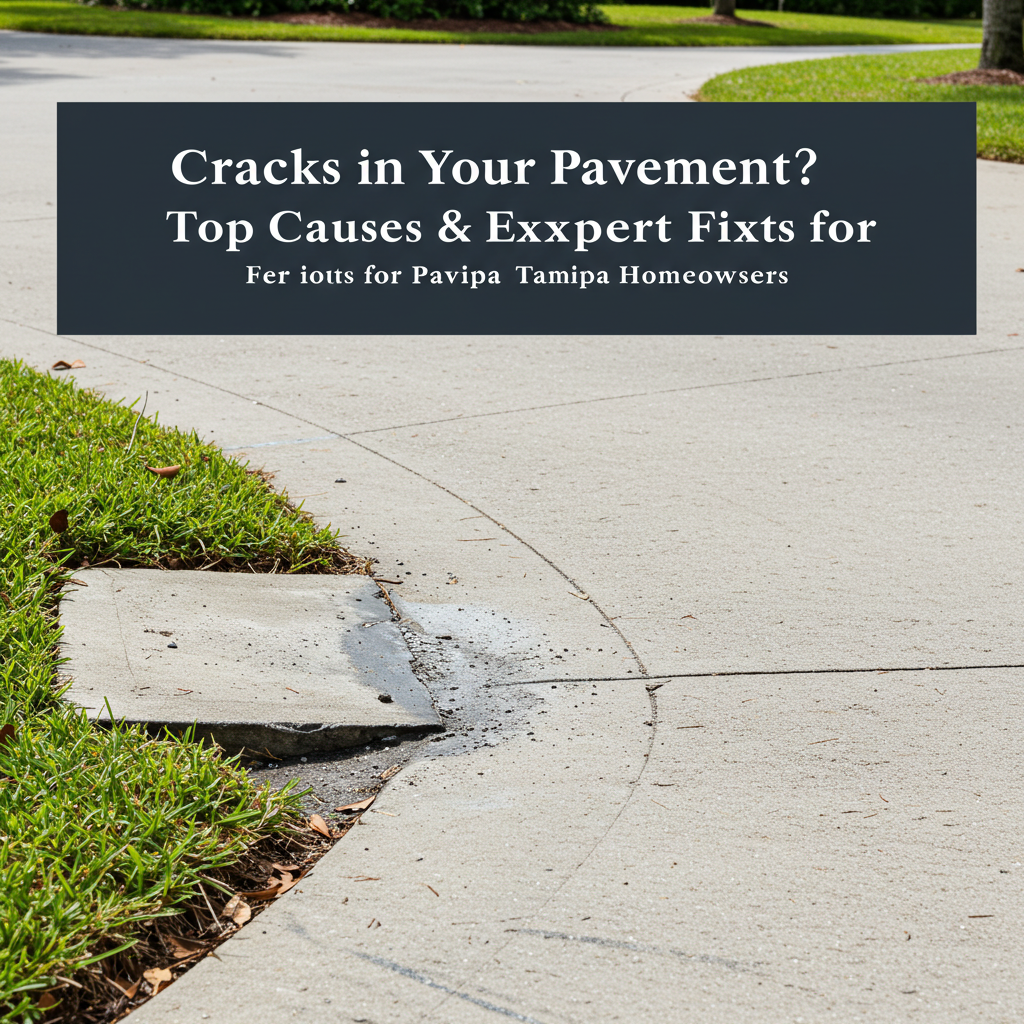
Cracks in Your Pavement? Top Causes & Expert Fixes for Tampa Homeowners
Pavement cracks in Tampa are primarily caused by a combination of extreme weather (intense heat, heavy rainfall, and prolonged UV exposure), unstable soil conditions, poor drainage, and inadequate initial installation. Addressing these underlying issues, rather than just surface patching, is key to durable repairs and preventing future damage to your concrete or asphalt surfaces.
Why are Tampa Pavements Prone to Cracking?
Tampa's unique geographical and meteorological conditions create a challenging environment for concrete and asphalt pavements. Understanding these factors is the first step in effective crack prevention and repair.
- Extreme Heat and UV Exposure: Florida's intense sun and high temperatures significantly impact paving materials. Asphalt's binder, which holds the aggregates together, can oxidize and become brittle over time due to UV radiation and heat. This causes the material to lose flexibility and shrink, leading to cracks. Concrete, while more heat-resistant, undergoes thermal expansion and contraction, and without proper expansion joints, this movement creates immense internal stress that results in cracks.
- Heavy Rainfall and Poor Drainage: Tampa experiences substantial rainfall, especially during the wet season. If your pavement lacks proper drainage, water can infiltrate cracks and penetrate the sub-base layer beneath your driveway or parking lot. This saturation weakens the sub-base, leading to settlement and, consequently, more severe structural cracks. Freeze-thaw cycles are less common but still contribute to this in milder cold snaps, with water expanding as it freezes within cracks.
- Expansive Clay Soils: Much of Florida, including the Tampa Bay area, sits atop expansive clay soils. These soils absorb water and swell, then shrink when they dry out. This constant cycle of expansion and contraction creates significant movement beneath your pavement, putting immense stress on the rigid concrete or flexible asphalt, leading to widespread cracking.
- Poor Sub-base Preparation: The stability and longevity of any paved surface heavily rely on the quality of its sub-base. If the ground was not properly graded, compacted, or if an insufficient layer of aggregate was used during the initial installation, the pavement will lack the necessary support. This leads to uneven settlement under load, causing cracks to form prematurely.
- Heavy Traffic and Loads: While residential driveways typically don't face commercial truck traffic, even regular use by multiple family vehicles, RVs, or utility trucks can cause damage over time if the pavement wasn't designed for such loads. Commercial parking lots are particularly susceptible to fatigue cracking from constant heavy vehicle traffic.
What Types of Cracks Indicate Serious Damage in Tampa?
Not all cracks are created equal. Identifying the type of crack can help diagnose the underlying problem and determine the best course of action.
- Alligator or Fatigue Cracking: These interconnected cracks resemble an alligator's skin and are a tell-tale sign of a deeper structural problem. Often seen in asphalt, they indicate failure of the sub-base due to poor drainage, heavy loads, or inadequate thickness. This type of cracking requires more than just a surface patch; it often necessitates removal and replacement of the affected area and sub-base repair.
- Transverse and Longitudinal Cracks: These run perpendicular (transverse) or parallel (longitudinal) to the pavement's center line. In asphalt, they can be caused by thermal stress, reflective cracking from underlying layers, or poor construction joints. In concrete, they often stem from drying shrinkage, thermal expansion/contraction, or stress relief in poorly spaced control joints. While smaller versions can be filled, wider, expanding ones indicate ongoing movement.
- Edge Cracks: Located within a foot or two of the pavement's edge, these cracks often result from a lack of lateral support, inadequate sub-base compaction at the edges, or heavy vehicles driving too close to the pavement's unsupported perimeter. Water infiltration here can quickly lead to widespread edge deterioration.
- Block Cracking: Similar to alligator cracking but forming larger, more rectangular patterns, block cracks are common in asphalt. They usually occur due to the aging and hardening of the asphalt binder, causing it to lose flexibility and contract into large blocks. While less indicative of sub-base failure than alligator cracks, they still allow significant water penetration.
- Settlement Cracks (Concrete): These are usually wider at one end and taper off, indicating that one part of the concrete slab has settled more than another. This is a clear sign of differential settlement in the underlying soil, which can be a serious structural issue.
- Spalling and Potholes: Spalling refers to surface flaking or chipping of concrete, often due to poor concrete mix, inadequate curing, or de-icing salts (less common in Tampa). Potholes are deep, bowl-shaped depressions that typically form in asphalt, often as a result of water infiltrating cracks, weakening the sub-base, and then being dislodged by traffic. Both are advanced stages of pavement deterioration.
When to be concerned: Pay close attention to crack width (anything over 1/4 inch is significant), depth, the pattern of cracking, and any accompanying issues like water pooling or uneven surfaces. These are strong indicators that professional intervention is needed.
How Can I Prevent Pavement Cracks on My Tampa Property?
Proactive measures are always more cost-effective than reactive repairs. Implementing these strategies can significantly extend the life of your paved surfaces.
- Ensure Proper Drainage: This is paramount in a rainy climate like Tampa's. Make sure your property's grading directs water away from paved areas. Install swales, catch basins, or permeable paving solutions where necessary to prevent water from collecting on or near your asphalt and concrete surfaces. Proper drainage prevents sub-base erosion and water infiltration.
- Invest in Quality Installation: The foundation of durable pavement is a professional, high-quality installation. This means ensuring the sub-base is properly prepared, compacted, and consists of adequate material layers. For concrete, this includes correct rebar or wire mesh placement and appropriate control/expansion joint spacing. For asphalt, it means using the right mix design and achieving proper compaction during laydown. Tampa Concrete & Paving emphasizes these foundational steps to prevent future issues.
- Regular Maintenance is Key:
- For Asphalt: Regular sealcoating every 2-5 years protects the surface from UV rays, water penetration, and oxidation, keeping the binder flexible. Promptly fill small cracks with hot-pour crack filler to prevent water from expanding them into larger problems or potholes.
- For Concrete: Apply a high-quality concrete sealer every 2-3 years to protect against moisture intrusion, stains, and surface abrasion. Ensure all control and expansion joints are clean and properly filled with appropriate sealant to allow for slab movement without cracking.
- Manage Heavy Loads: Avoid parking exceptionally heavy vehicles (e.g., large RVs, commercial trucks) on residential driveways not designed for such weight. If your commercial property sees heavy traffic, ensure the pavement design (thickness, sub-base) is adequate for the expected load.
- Address Small Issues Promptly: A small crack, if left unattended, will inevitably become a larger, more expensive problem. Regularly inspect your pavement and address minor cracks, potholes, or drainage issues as soon as they appear. Early intervention saves money and extends the life of your investment.
When Should I Call a Professional for Pavement Cracks in Tampa?
While DIY crack fillers can address minor surface fissures, many types of pavement cracks, especially those common in Tampa, require the expertise of a professional paving contractor. Knowing when to call in the experts can prevent minor issues from escalating into costly full-scale replacements.
- Widespread or Interconnected Cracks: If you observe alligator cracking, extensive block cracking, or a network of interconnected cracks, it's a strong indicator of underlying structural failure. These problems cannot be effectively solved with superficial patching.
- Cracks Wider Than 1/4 Inch: Any crack that is consistently wider than a quarter-inch allows significant water penetration and often signifies deeper movement or sub-base issues that require professional assessment and repair.
- Uneven or Sinking Pavement: If your pavement exhibits noticeable dips, humps, or signs of settling, especially with accompanying cracks, this points to severe sub-base or soil stability problems. These require professional diagnosis and often comprehensive repair or replacement.
- Water Pooling or Drainage Issues: If cracks are accompanied by standing water on your pavement, it indicates a critical drainage failure. A professional can assess the grading, install appropriate drainage solutions, and repair the damaged pavement simultaneously.
- Uncertainty About the Cause or Solution: If you're unsure why your pavement is cracking, or what the most effective and long-lasting repair method would be, it's always best to consult with experts. Misdiagnosing the problem can lead to wasted money on ineffective repairs.
For any significant pavement crack concerns in the Tampa Bay area, reaching out to a reputable and experienced paving and concrete contractor is your best course of action. At Tampa Concrete & Paving, our team of seasoned professionals understands the specific challenges that Tampa's climate and soil conditions pose for concrete and asphalt surfaces. We offer comprehensive inspections, accurate diagnoses, and tailor-made repair solutions, from crack filling and sealcoating to full-depth repair and replacement. Don't let small cracks become major liabilities; contact us today for an expert assessment and ensure the longevity and safety of your paved surfaces.
Need Professional Assistance?
Get a free, no-obligation estimate from our expert local team today.