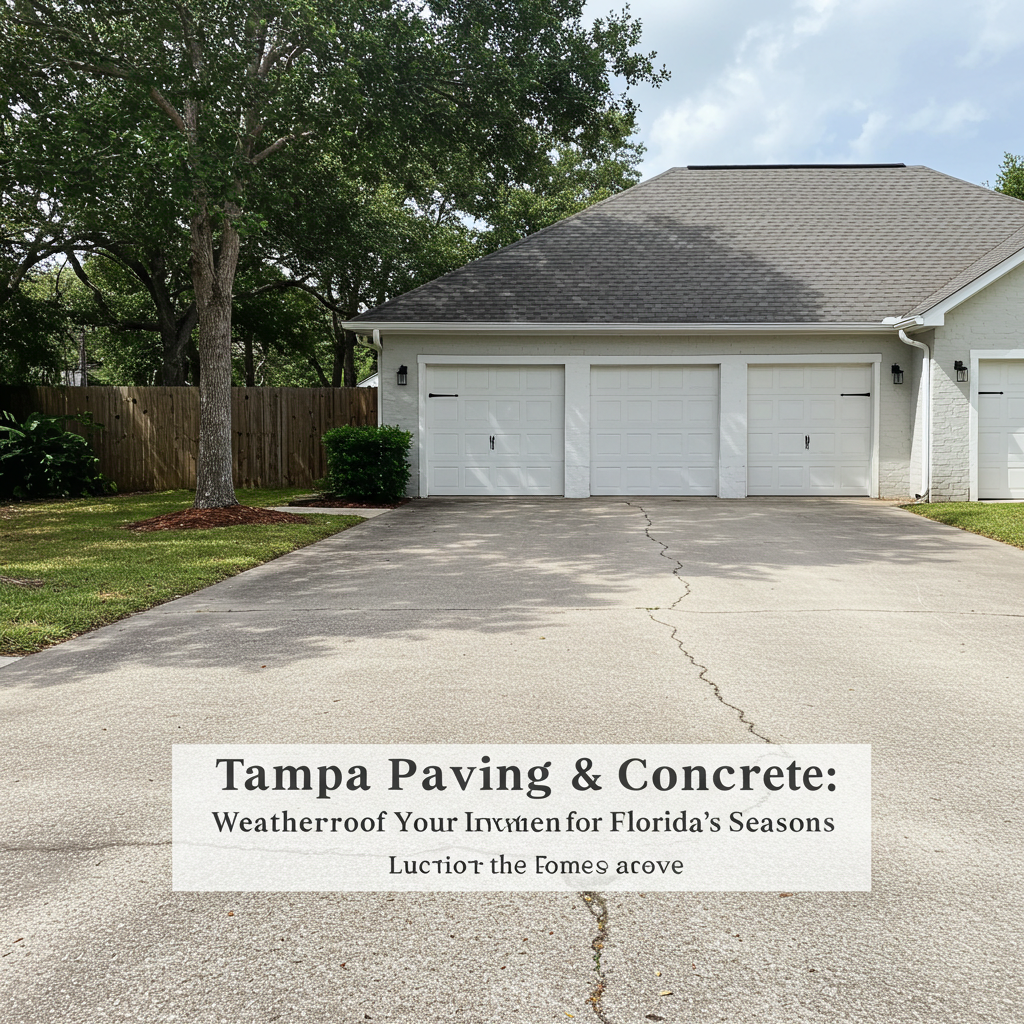
Tampa Paving & Concrete: Weatherproof Your Investment for Florida's Seasons
Protecting your concrete and paving in Tampa from harsh weather involves regular cleaning, proper sealing, and prompt repair of minor issues. Addressing drainage, using UV-resistant sealants, and performing seasonal inspections are crucial steps to combat intense sun, heavy rainfall, and high humidity, ensuring the longevity and structural integrity of your surfaces.
Why is Tampa's Weather So Tough on Concrete and Paving?
Living in Tampa offers beautiful sunshine and warm weather for much of the year, but these very elements, combined with our intense rainy season, can be incredibly detrimental to your concrete and paved surfaces. Understanding these challenges is the first step in effective preservation. The constant exposure to intense ultraviolet (UV) rays from the Florida sun causes materials like asphalt to oxidize and become brittle, leading to premature cracking and fading. For concrete, while less susceptible to UV degradation in terms of structural integrity, the sun can accelerate the drying out of sealants and exacerbate thermal expansion and contraction.
Then there's the torrential rain. Tampa experiences heavy downpours, especially during the summer months. Poor drainage around driveways, patios, and walkways can lead to standing water, which seeps into cracks and expands the underlying base. This saturation weakens the sub-base, leading to sinking, cracking, and potholes. If water freezes in cracks (though rare in Tampa, it can happen in unusual cold snaps), it expands and causes significant damage. Moreover, water runoff can erode the soil beneath paved areas, creating voids that cause sections to collapse.
Humidity also plays a subtle but significant role. High humidity levels can foster mold and mildew growth on surfaces, making them slippery and causing discoloration. While not directly damaging structurally, it indicates a constant presence of moisture that can compromise sealants and lead to superficial issues if not regularly cleaned. The combination of these factors – intense heat, heavy rain, and high humidity – creates a unique and aggressive environment that demands specific attention for Tampa paving and concrete protection.
What Are the Key Steps to Weatherproofing Your Tampa Driveway and Patios?
Proactive weatherproofing is crucial for the longevity and appearance of your Tampa concrete and paving. Taking these steps can significantly extend the life of your investment and prevent costly repairs down the line.
- Regular Cleaning: This might seem basic, but keeping your surfaces free of dirt, debris, and organic matter is vital. Leaves, twigs, and soil retain moisture, which can accelerate deterioration and encourage mold growth. Power washing, done correctly, can remove stubborn grime and biological growth. However, be cautious with pressure settings, especially on older or delicate surfaces, to avoid etching or damaging the material. A mild detergent can help break down oil stains and mildew.
- Effective Sealing: This is arguably the most critical step for weatherproofing.
- Concrete Sealing: For concrete driveways, patios, and walkways, sealing creates a protective barrier against moisture penetration, UV rays, and staining. There are various types of sealers: penetrating sealers offer long-lasting protection by chemically reacting with the concrete, while topical sealers provide a surface film that enhances appearance and repels water. In Tampa, look for sealers with UV inhibitors to combat sun damage and those offering good resistance to water and oil. Re-sealing is typically recommended every 2-5 years, depending on traffic and sealer type.
- Asphalt Sealing: Asphalt sealcoating is essential for protecting against oxidation, water penetration, and oil spills. The sealcoat acts as a sacrificial layer, absorbing the brunt of the weather and traffic. It restores the rich black color of asphalt, improves its flexibility, and extends its lifespan. Asphalt should generally be sealcoated every 2-3 years, or as soon as it begins to show signs of fading or minor cracking.
- Addressing Drainage: Proper drainage is non-negotiable in a high-rain area like Tampa. Ensure that water flows away from your concrete and paved surfaces, not towards or onto them. This might involve:
- Grading: Ensuring your landscape is properly graded so water naturally runs off into permeable areas or drainage systems.
- Gutter Downspout Extensions: Directing roof runoff far away from your driveway and foundation.
- Channel Drains: Installing channel drains along garage entries or low-lying areas to capture and divert water.
- Permeable Paving Solutions: For new installations or major renovations, considering permeable pavers can greatly reduce standing water and runoff issues.
- Prompt Crack and Pothole Repair: Small cracks and potholes may seem minor, but they are entry points for water. If left unaddressed, water ingress can lead to freeze-thaw damage (in rare cold snaps), erosion of the sub-base, and ultimately, much larger, more expensive repairs. For concrete, crack filling with elastomeric sealants is vital. For asphalt, crack sealing and pothole patching prevent further deterioration and extend the pavement's life.
When Should I Inspect My Paving for Weather-Related Damage in Tampa?
Consistent vigilance is your best defense against weather-related wear and tear on your Tampa paving and concrete. Establishing a routine inspection schedule, particularly tied to Tampa's distinct seasons, can help you catch small issues before they become major problems. Expert technicians recommend a multi-faceted approach to inspections:
- Pre-Rainy Season (Late Spring/Early Summer): Before the heavy summer rains begin, conduct a thorough inspection. Look for:
- New cracks or widening of existing cracks in concrete or asphalt.
- Signs of fading or discoloration on asphalt, indicating a need for sealcoating.
- Surface pitting or spalling on concrete.
- Any areas where water seems to collect or drain improperly.
- Growth of moss, algae, or mildew, especially in shaded or damp spots.
Addressing these issues before the peak rainy season minimizes water penetration and prevents exacerbation of damage.
- Post-Rainy Season (Early Fall): After the summer's intense downpours, re-evaluate your surfaces. This is critical because prolonged exposure to moisture can reveal hidden damage. Pay close attention to:
- Areas of standing water that may have developed due to shifting soil or compromised drainage.
- Increased cracking or potholes that might have formed due to water saturation.
- Soft spots or areas where the pavement feels "spongy," which could indicate sub-base failure.
- Erosion around the edges of driveways or patios.
- After Severe Weather Events (Year-Round): Any time Tampa experiences a severe thunderstorm, tropical storm, or hurricane, a post-event inspection is paramount. High winds can bring down debris, and intense rainfall can cause localized flooding. Look for:
- Impact damage from fallen branches or other objects.
- New washouts or erosion from sudden, heavy water flow.
- Any immediate signs of settling or sinking pavement.
- Routine Visual Checks (Monthly): A quick walk-around once a month can help you spot early signs of trouble. Look for obvious changes, new stains, or small cracks that are just beginning to form. Early detection allows for minor, less expensive repairs.
Should I DIY or Hire Professionals for Weather Damage Repair in Tampa?
When facing concrete and paving damage from Tampa's weather, many homeowners wonder if they should tackle repairs themselves or call in the experts. While DIY approaches can be tempting for minor issues, understanding the complexities involved often leads to realizing the value of professional service. For small, superficial cracks in concrete or very minor asphalt patching, a diligent homeowner with the right tools and materials might manage a temporary fix. However, even these seemingly simple tasks require proper surface preparation, specific product application, and an understanding of curing times to ensure effectiveness.
The challenges with DIY weather damage repair include:
- Diagnosing the Root Cause: A crack might not just be a crack; it could signify underlying sub-base issues, poor drainage, or soil movement. Professionals are trained to identify these root causes, ensuring the repair is long-lasting, not just a cosmetic cover-up.
- Material Selection: There's a vast array of sealants, patching compounds, and repair materials. Choosing the wrong type for Tampa's climate or your specific paving material can lead to failed repairs and wasted effort. Experts know which materials perform best under local conditions.
- Equipment and Expertise: Proper crack filling, asphalt sealcoating, or concrete resurfacing often requires specialized equipment (e.g., commercial-grade pressure washers, hot rubber crack fillers, asphalt distributors) and techniques that a homeowner typically doesn't possess.
- Safety: Working with certain chemicals, heavy equipment, or on uneven surfaces can pose safety risks.
- Long-Term Value: A professional repair, especially one that addresses the underlying problem, will typically last much longer and prevent recurring issues, saving money in the long run. DIY fixes, if not done perfectly, can often accelerate deterioration or create new problems.
For significant cracks, potholes, extensive sinking, or widespread surface deterioration, professional intervention is highly recommended. Companies like Tampa Concrete & Paving have the experience, equipment, and knowledge of local conditions to provide durable, effective solutions. They can assess the extent of weather-related damage, recommend the most appropriate repair or maintenance strategy – be it concrete repair, asphalt patching, crack sealing, or a full resurfacing – and execute it with precision. Investing in professional weatherproofing and repair services for your Tampa concrete and paving ensures your investment is protected against Florida's challenging climate for years to come.
Don't let Tampa's demanding weather compromise the integrity and beauty of your property's paving and concrete. Proactive care, timely inspections, and professional expertise are your best defense. If you're unsure about the condition of your driveway, patio, or walkways, or if you're ready to implement a comprehensive weatherproofing strategy, contact Tampa Concrete & Paving today. Our team of experienced professionals is dedicated to providing high-quality concrete and paving solutions designed to withstand Florida's unique climate, ensuring your surfaces remain durable, safe, and visually appealing. Let us help you protect your investment!
Need Professional Assistance?
Get a free, no-obligation estimate from our expert local team today.