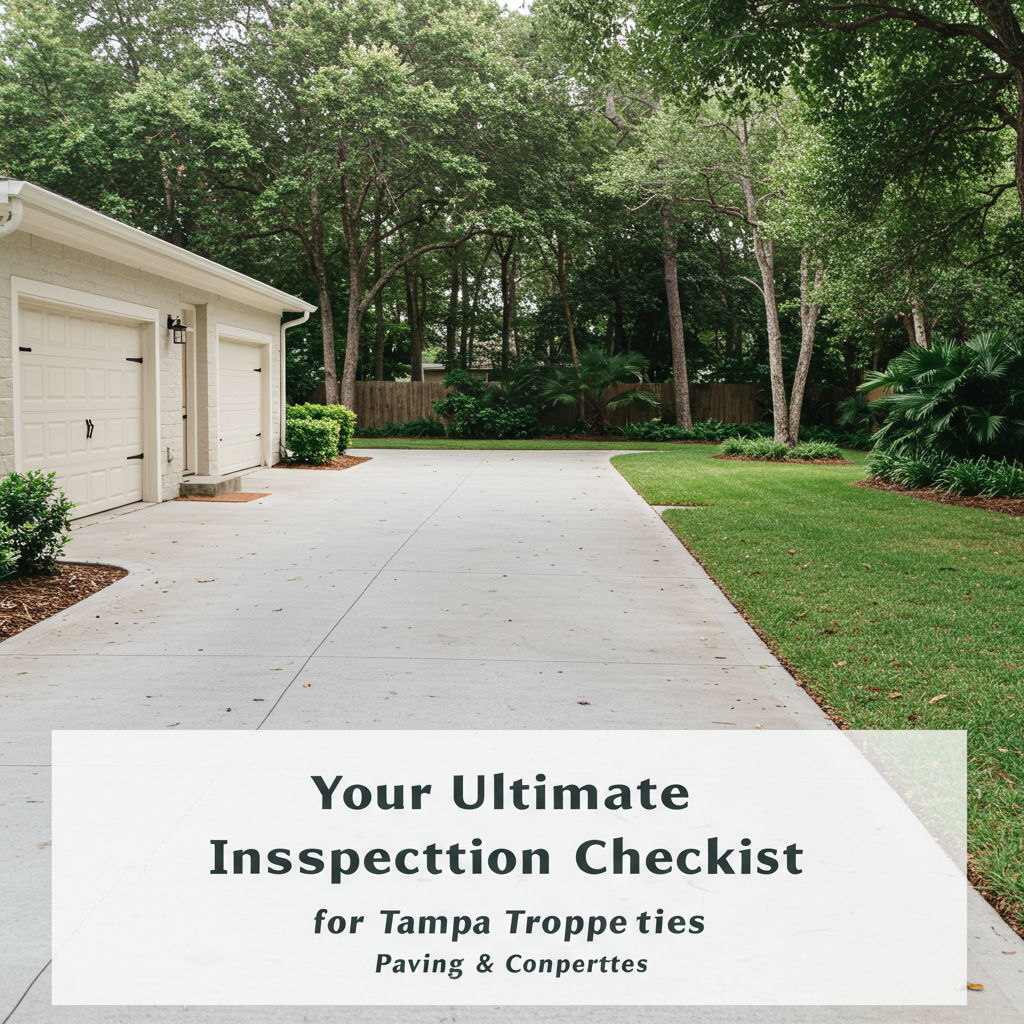
Your Ultimate Paving Inspection Checklist for Tampa Properties
A paving inspection is a systematic evaluation of asphalt or concrete surfaces on your property to identify signs of wear, damage, and potential structural issues. This proactive approach helps property owners in Tampa detect problems early, prevent costly extensive repairs, and ensure the safety and longevity of their paved assets.
For any property owner in Tampa, from residential driveways to expansive commercial parking lots, the integrity of your paving is paramount. The harsh Florida climate, with its intense sun, heavy rainfall, and humid conditions, can significantly accelerate wear and tear on both asphalt and concrete surfaces. Neglecting regular inspections can lead to minor issues escalating into major structural failures, posing safety risks, and dramatically increasing repair costs. This comprehensive guide provides you with an ultimate paving inspection checklist tailored for Tampa's unique environment, empowering you to protect your investment.
What Should You Look For During a Paving Inspection in Tampa?
Identifying common distresses in your paving is the first step towards effective maintenance. During your Tampa pavement inspection, pay close attention to the following:
- Cracks: Cracks are often the first sign of underlying issues. You'll encounter several types:
- Alligator Cracking (Fatigue Cracking): This pattern resembles alligator skin and indicates structural failure due to repeated traffic loading. In Tampa, poor drainage or an inadequate sub-base, exacerbated by heavy rains, can contribute significantly to this.
- Longitudinal Cracks: These run parallel to the pavement's center line or laydown direction. They can result from poorly constructed paving joints, reflective cracking from underlying layers, or pavement fatigue.
- Transverse Cracks: These cracks run perpendicular to the pavement's center line. They are often caused by thermal shrinkage of the asphalt or concrete slab due to temperature fluctuations.
- Block Cracking: Interconnected cracks forming rectangular or polygonal shapes, often caused by asphalt binder aging and shrinking due to sun exposure and lack of flexibility.
- Potholes: These are bowl-shaped depressions that penetrate through the full depth of the paving surface. They form when water seeps into cracks, freezes (less common in Tampa, but still possible with cold fronts) or saturates the sub-base, and then traffic dislodges the weakened material. Potholes are dangerous and accelerate damage if not addressed quickly.
- Surface Disintegration:
- Raveling: This occurs when aggregate particles become loose from the asphalt surface. It's often caused by insufficient asphalt binder, poor compaction, or aging due to sun exposure, common in Tampa's climate.
- Spalling: For concrete, spalling is the chipping or flaking of the surface, often due to moisture penetration, freeze-thaw cycles (less common here), or de-icing chemicals.
- Drainage Issues: Standing water on your paved surfaces is a major red flag. Look for:
- Ponding: Areas where water collects after rain. This indicates an uneven surface or insufficient slope. Ponding water can infiltrate cracks, weakening the sub-base and causing further damage.
- Erosion: Areas where water runoff is eroding the edges of your paving or adjacent soil.
- Fading and Discoloration: Over time, UV radiation from the intense Tampa sun can cause asphalt to oxidize, leading to a gray, faded appearance. This indicates a loss of essential oils and flexibility, making the pavement brittle and prone to cracking. Concrete can also show discoloration from oil stains or chemical spills.
- Edge Deterioration: The edges of driveways and parking lots are vulnerable to crumbling, cracking, and breaking, especially if not properly supported or if frequently driven over.
- Vegetation Growth: Weeds, grass, or even small trees growing through cracks indicate significant structural weaknesses and the presence of moisture. Roots can exert immense pressure, widening cracks and accelerating damage.
Understanding these signs allows you to document specific issues and provide clear information when seeking professional advice.
How Often Should Tampa Paving Be Inspected?
The frequency of your paving inspections should vary based on the type of property, traffic volume, and the age of the pavement, but Tampa's climate necessitates a more proactive approach:
- Residential Driveways: For most homeowners, a thorough inspection at least once a year is recommended. The best times are usually in early spring after any potential winter cold snaps, and again in late fall before the heaviest rainy season. This allows you to catch issues before the peak sun and rain cycles exacerbate them.
- Commercial Parking Lots and Roads: Due to higher traffic volumes and heavier loads, commercial properties should undergo professional inspections bi-annually, or even quarterly. High-traffic areas, delivery zones, and areas prone to heavy vehicle braking should be monitored even more frequently.
- After Major Weather Events: Following severe thunderstorms, hurricanes, or periods of unusually heavy rainfall, an immediate inspection is crucial. Excess moisture is a primary culprit for pavement degradation in Florida, and rapid assessment can prevent significant water-related damage from spreading.
- Before Significant Traffic Changes: If your property is expecting an increase in vehicle weight or volume (e.g., construction, business expansion), a pre-emptive inspection can help ensure the pavement can handle the new demands.
Regularity is key. The tropical climate in Tampa means that small cracks can quickly become large potholes if left unattended, costing significantly more in the long run.
What Tools Do You Need for an Effective Paving Assessment?
While a professional assessment involves specialized equipment, you can conduct a highly effective preliminary inspection with basic tools:
- Camera or Smartphone: Essential for documenting all observed damage. Take clear, well-lit photos from different angles. This visual record is invaluable for tracking progression and communicating issues to contractors.
- Measuring Tape: Use to measure the length, width, and depth of cracks and potholes. Quantifying the damage helps in assessing severity and estimating repair needs.
- Chalk or Paint Marker: To circle and clearly mark areas of concern on the pavement. This helps ensure that all identified issues are brought to the attention of a professional.
- Notebook and Pen/Clipboard: For jotting down notes, observations, dates, and measurements. A structured approach ensures you don't miss anything.
- Flashlight: Useful for inspecting shaded areas, poorly lit sections, or for getting a better look into deeper cracks or potholes, especially during early morning or late afternoon inspections.
- Straightedge or Level: To check for surface irregularities, such as dips or humps, that could indicate sub-base issues or contribute to ponding.
These simple tools allow for a systematic and well-documented inspection, providing a solid foundation for any necessary repair planning.
When Should You Call a Professional Paving Inspector in Tampa?
While DIY inspections are valuable for early detection, there are clear instances when professional expertise is indispensable. Knowing when to call in the experts at Tampa Concrete & Paving can save you time, money, and stress:
- Extensive or Deep-Seated Damage: If you observe widespread alligator cracking, large potholes that indicate sub-base failure, or significant heaving and sinking, these are signs of structural problems beyond simple surface repair. Professionals can diagnose the root cause, which might involve issues with the underlying soil or drainage system.
- Drainage System Failures: Persistent ponding, especially near foundations or building entrances, indicates a serious drainage problem that a professional paving company can assess and redesign. Improper drainage can lead to erosion, water intrusion into buildings, and accelerated pavement deterioration.
- Unknown Causes of Damage: If you notice unusual patterns of cracks or surface deterioration and can't pinpoint the cause, a professional can conduct soil tests, core samples, and other diagnostic procedures to understand the underlying issues.
- Commercial Property Assessments: Due to high traffic volumes, liability concerns, and compliance requirements (e.g., ADA accessibility), commercial properties benefit significantly from professional paving assessments. Experts can provide detailed reports, long-term maintenance plans, and ensure your pavement meets safety standards.
- Insurance Claims or Property Transactions: When dealing with insurance claims for storm damage or during the purchase/sale of a property, a certified professional inspection provides an unbiased, expert opinion on the condition and value of the pavement.
- Long-Term Planning and Budgeting: For large-scale properties, a professional paving company can develop a comprehensive Pavement Management Plan (PMP). This plan outlines projected maintenance and repair needs over several years, helping you budget effectively and maximize the lifespan of your paved assets.
A professional inspection by Tampa Concrete & Paving offers not just an assessment, but also expert recommendations for the most cost-effective and durable solutions, whether it's routine maintenance, targeted repairs, or full replacement. They have the specialized knowledge of local soil conditions, climate impacts, and the best materials for Tampa's environment.
Maintaining the paved surfaces of your Tampa property is an ongoing commitment, but a highly rewarding one. Regular, thorough inspections are your first line of defense against costly repairs, safety hazards, and premature pavement failure. By utilizing this ultimate paving inspection checklist, you can proactively identify issues and protect your investment. When you encounter signs of significant distress or simply need expert guidance, remember that Tampa Concrete & Paving is your trusted local partner. Our team of experienced professionals can provide comprehensive inspections, precise diagnostics, and durable solutions tailored to the unique demands of the Tampa climate, ensuring your asphalt and concrete surfaces remain safe, functional, and visually appealing for years to come. Don't wait for minor issues to become major problems – contact Tampa Concrete & Paving today for a professional assessment and peace of mind.
Need Professional Assistance?
Get a free, no-obligation estimate from our expert local team today.